Why Stress Makes You Reach for the Doughnut.
The Hidden truth between Insulin, Serotonin, Dopamine & Your Mood
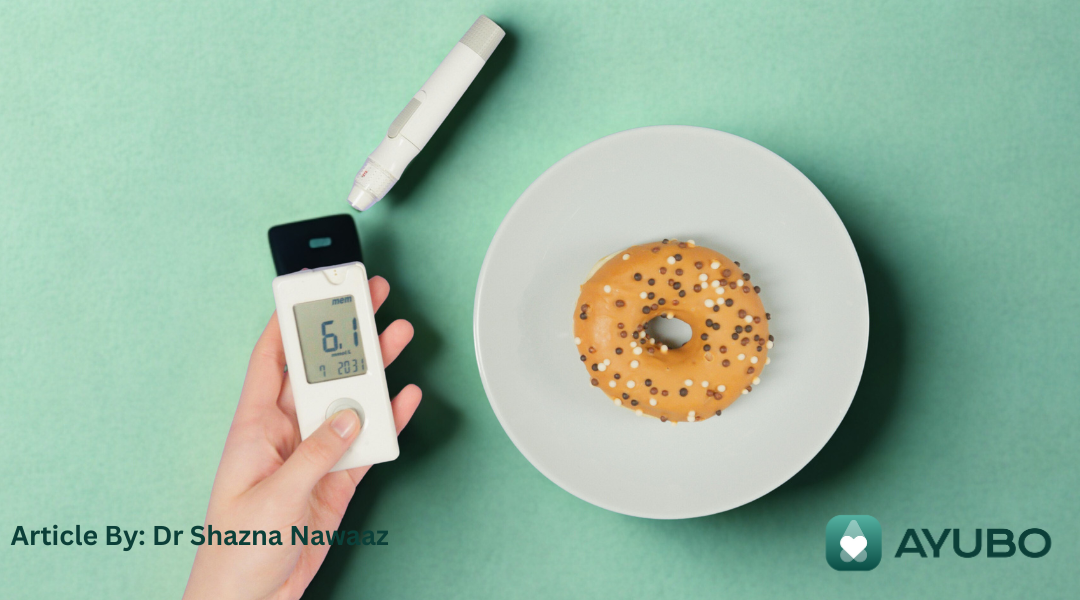
There is a moment all of us know too well. It’s 4 PM at the office on Wednesday. Your hair is disheveled. Your inbox is exploding with emails. Your boss just asked you if you’ve met a deadline for a proposal to be submitted. Your blood pressure is sky-rocketing through the roof. And suddenly, like a soft but persuasive whisper in your brain says, “Eat a doughnut. You deserve one.” And strangely it does, for a short, sweet moment, you feel a whole lot better.
Have you ever wondered how this happens? Why does stress push us toward sugary comfort foods? Why does the first bite bring peace, and a sense of happiness but the aftermath brings guilt, sleepiness, or even a major dip in your mood?
And, most importantly, does this have anything to do with the hormone,
insulin, your risk to develop diabetes and your mental health?
To answer that, we have to look at an elegant, almost delicate
biochemical dance happening inside your body ; a symphony orchestra
between the hormones insulin, serotonin, ,dopamine and the essential
proteins tryptophan and tyrosine.
Because the truth is, we don’t just “stress eat.” We biochemically drift
toward certain foods based on how they alter our brain chemistry.
And in conditions like diabetes, where insulin does not act the way it
should, this subtle balance shifts, affecting your emotional health, largely.
Let’s break it down to 'bite-size' pieces.
1. The Brain’s Two Voices: Serotonin and Dopamine
Think of your brain as having two emotional “systems” that keep you
functioning and mentally balanced.
Serotonin is the calm, steady baseline hormone. It offers contentment,
emotional stability, reduces anxiety and improves sleep. It gives your
brain a sense of , “I am okay right now.”
Serotonin works like a soft background hum of peace. Not dramatic, not a
burst signal but just a steady, baseline stabilizer.
Dopamine on the other hand is responsible for the drive, the feeling of
being rewarded, and motivation. It learns from your patterns and gives
you energy, motivation, ambition, focus and the thrill of “That felt good,
lets do it again.”
Dopamine pushes you toward goals and novelty. It is excitement unlike
serotonin which is “calmness”.
A healthy mind balances both, where serotonin keeps you grounded
and dopamine keeps you moving, too much of one can suppresses the other where, too much of serotonin will give you a lack of motivation and a flat mood whereas a too much of dopamine can lead you to addiction and impulsivity.
And here is how the twist happens. These neurotransmitters depend on
the availability of certain essential amino acids in your blood like
tryptophan for the production of serotonin and tyrosine for the production
of dopamine who are both competitor to enter the brain via the blood-
brain barrier.
The gatekeeper for all this competition? Drumroll….. Insulin!
2. The Insulin Switch: How Food Changes Your Mood
After a carbohydrate-rich meal like rice, bread, hoppers, roti, kottu,
biscuits, cake, doughnuts, the insulin levels in our blood, rises as the
pancreas secretes insulin.
But insulin doesn’t just control blood sugar. It reshapes the bloodstream
in a way that changes neurotransmitter availability. Insulin also causes
many large neutral amino acids like tyrosine and valine to be absorbed
into muscle cells.
Tryptophan, however, remains in the bloodstream bound to albumin.
The relative increase of tryptophan concentration vs. tyrosine at the blood-
brain barrier makes it easier for tryptophan to enter the brain.
More tryptophan in the brain increases the serotonin production.
Serotonin makes you calm, sleepy and comforted feeling.
And yes, this is the real reason we feel relaxed, peaceful, even a bit
drowsy after a heavy lunch of rice and curry. A “food coma”!
This mechanism also explains the basis of stress eating - When you are
stressed, your brain is craving a serotonin boost and processed, simple
carbs are the fastest way to get it.
Which brings us back to our culprit - the doughnut.
But now we know, the doughnut is not an emotional weakness.
It is neurochemistry.
3. But where does dopamine come in?
Tyrosine, the amino acid needed for dopamine, competes with
tryptophan.
When insulin sweeps tyrosine into muscles, the production of dopamine
reduces and serotonin “wins” the competition entering the brain more
easily.
This is why high-carb meals produce calmness instead of motivation and
after eating sugary food, we don’t feel driven instead we feel like lying
down or having a quick nap.
The balance is delicate.
4. What Happens in Diabetes? (Because Insulin Resistance Changes
Everything)
In diabetes or even prediabetes insulin is either not produced in sufficient
quantities or the insulin that is produced doesn’t work effectively.
We superficially know this as an increase in blood glucose levels but it
also, increases circulating tyrosine levels because insulin is not pulling
the amino acids into muscle efficiently. This leads to Lower tryptophan
competition advantage which is the “insulin trick” that helps serotonin
production which will be weakened. When there isn't enough serotonin to
balance out the Dopamine it results in a shift in favours leading to anxiety, irritability, restlessness, a low mood, decreased tolerance to
stress and easy emotional exhaustion.
And this can happens even before a person is diagnosed with diabetes.
This is why many individuals with diabetes or insulin resistance report
mood instability, low motivation, higher sensitivity to stress, emotional
fatigue and burnout and even sleep disturbances.
This biochemical imbalance partly explains why major depressive
disorder and type 2 diabetes have a bidirectional relationship. In other
words, depression increases the diabetes risk and Diabetes increases
depression risk. Both conditions affect insulin function and
neurotransmitter imbalance.
5. Can diabetes cause suicidal ideation?
Diabetes itself does not directly cause suicidal thoughts. However, certain
diabetes-related factors increase the risk of suicidal ideation like
longer disease duration of diabetes (>5 years), poor glycaemic control,
being on insulin therapy and pre-existing major depressive disorder.
People with diabetes often report feeling overwhelmed , worrying
about complications, being judged by society on their diagnosis, guilty
about numbers like their fasting blood glucose and HbA1C values,
frustrated with dietary restrictions and drug compliance.
When serotonin is low and dopamine signaling is dysregulated, these
emotional burdens feel much heavier.
6. The Stress–Sugar Cycle: How the Brain Gets Trained
Here’s the part most people don’t know.
When you eat a sugary comfort food during stress, the serotonin levels
rise very briefly and you feel immediate but temporary relief.
Dopamine learns from this behaviour as “that worked, lets remember it”.
So next time you are stressed your brain sends you back to the same food
to feel better.
This is not a lack of discipline. It is reinforcement learning. The brain
genuinely believes it is helping you cope.
And this cycle is stronger with insulin resistance, prediabetes, diabetes,
chronic stress and sleep deprivation because serotonin is already lower,
the brain keeps pushing you toward quick fixes.
7. Breaking the Cycle Without Blame
Lifestyle Medicine gives us practical, compassionate, science-based
strategies to break this vicious cycle and none of them involve punishing
yourself for eating a doughnut.
- 1. Eat slow-release, unprocessed, complex carbs instead of simple,
processed sugars.
Swap biscuits with fruits with fibre or pastries with nuts. Red rice, quinoa,
or mixed grains are better for you than white rice. These still support a
more sustained long lasting serotonin production without causing a surge
and crash. - 2. Build serotonin naturally
Morning sunlight, brisk walking, regular meals, improving gut health,
gratitude journaling and connection with loved ones prevent you being a
dopamine junkie and help with the balance between seratonin and
dopamine. - 3. Build dopamine sustainably
Exercise. achieving small goals, structured routines, creative projects,
adequate sleep, protein-rich meals might feel slow paced but they are also
the sustainable way to have a healthy dopamine drive in your body. - 4. Improve insulin sensitivity
Strength training, reducing adding processed sugars to the diet,
following a balanced plate method, healthy tactics to manage stress,
having good sleep, proper hygiene, medical reviews for
Metformin Diabetes and pre-diabetes when needed will help you realize
that the diagnosis of diabetes is not a death warrant but with adequate
control you can live a normal, healthy, uncomplicated life. - 5. Address emotional health openly
If you have diabetes, emotional health is not optional. It is mandatory. Psychological support, counselling, coaching, health education and open
conversation reduce the personal burden significantly.
8. The Take-Home Message
Your cravings are not random. Your cravings are also not the enemy.
Your mood is not a “weakness.” Your emotional eating is not a moral
failure. Being a diabetic is not the end of a normal life.
It is complex biology reacting to stress, insulin, and neurotransmitters to
maintain the homeostasis within your body.
When insulin works well, serotonin and dopamine stay in harmony. You
are calm yet motivated, peaceful yet focused, satisfied yet driven. But
alas, when insulin becomes dysregulated, so does your metabolism and
emotional health.
Understanding the science behind this removes guilt and opens a pathway
for healing and understanding.
So the next time stress whispers, “Eat the doughnut,” just remember, your
body isn’t betraying you, it’s trying its best to restore balance. And now,
you know how to help it do that through compassion, knowledge and
sustainability.
By; Dr. Shazna Nawaaz
(MBBS, SAITM
SLMC - 40180
Awaiting - Diploma in lifestyle medicine
Reading - MBA in Healthcare administration - Coventry University, UK)