

A Bite, A Lesson: Why Rabies Still Matters in Sri Lanka
Jayanath is the kind of young man you instantly like, bright, curious, full of life. A 24-year-old engineering student studying in the UK, he had returned…

Jayanath is the kind of young man you instantly like, bright, curious, full of life. A 24-year-old engineering student studying in the UK, he had returned to Sri Lanka for his internship at a power station. Music, animals, adventure he loved them all.
One evening, on his way home, he stopped for a plain tea and a vadai. That’s when he saw them-tiny newborn kittens, huddled together, barely a few days old. Like many of us would, he couldn’t resist. He bent down, picked one up, and began gently petting it.
A moment later, a sharp nip. A small bite. A little blood.
“It’s nothing,” he thought.
But in Sri Lanka, that “nothing” could be something serious.
What is Rabies?
Rabies is a fatal viral infection that affects the brain and nervous system. It is caused by the Rabies virus and is transmitted through the saliva of infected animals, most commonly via:
- Bites
- Scratches
- Licks on broken skin or mucosa
Once symptoms appear, rabies is almost 100% fatal. The tragedy? It is completely preventable if treated early.
How Common is Rabies in Sri Lanka?
Sri Lanka has made significant progress in controlling rabies, but it still exists.
- Dozens of human deaths are reported annually
- Thousands of people require treatment after animal bites
- Dogs remain the main reservoir, but cats, monkeys, and bats can also transmit the virus
Unlike countries such as the UK (where rabies is effectively eliminated), Sri Lanka remains endemic- which means every bite matters.
What Should You Do After a Bite or Scratch?
Jayanath did one thing right-he came early.
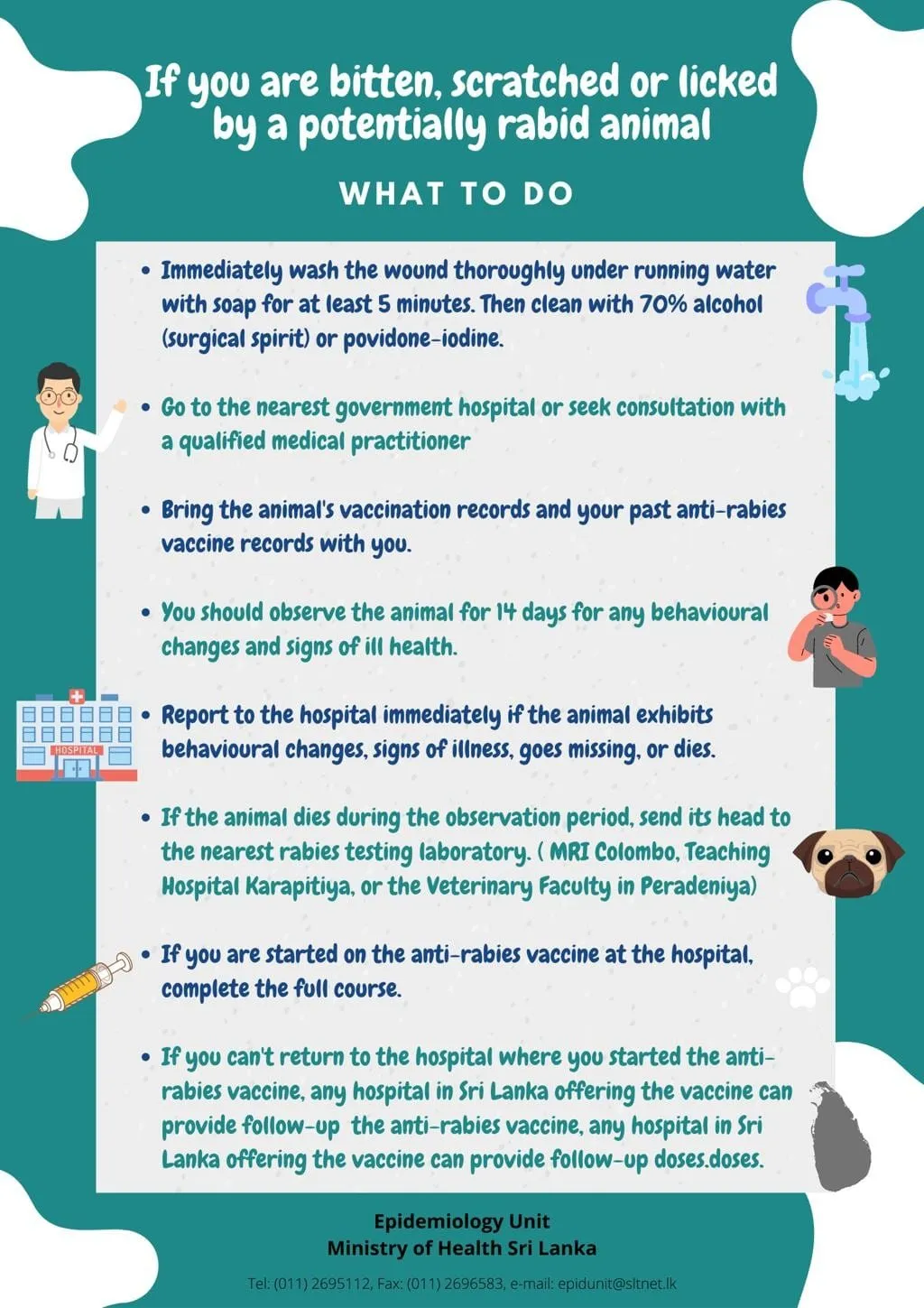
Immediate First Aid (DO THIS FIRST!)
- Wash the wound immediately
- Soap + running water
- At least 15–20 minutes
- Apply povidone-iodine or antiseptic
Then - SEEK MEDICAL CARE URGENTLY
Visit the nearest hospital or Anti-Rabies Unit.
Doctors will assess:
- Type of exposure
- Animal involved
- Severity and location of wound
Treatment: What Shots Did Jayanath Get?
Based on Sri Lankan national guidelines:
1. Anti-Rabies Vaccine (ARV)
- Given in a series of doses (commonly 4-5 doses)
- Usually on Day 0, 3, 7, and 14
2. Rabies Immunoglobulin (RIG)
- Given for Category III exposures (e.g., bleeding bites)
- Injected around the wound
- Provides immediate passive immunity
Jayanath needed 4 vaccine doses because he had a bite with bleeding.
Your Responsibility as a Pet Owner
Rabies prevention is not just a medical issue, it’s a community responsibility.
If you have pets:
- Vaccinate your dog/cat annually against rabies
- Do not allow pets to roam freely
- Seek veterinary care for sick animals
Teach children:
- Avoid touching unknown animals
- Do not disturb animals while eating or with newborns
- Report bites immediately
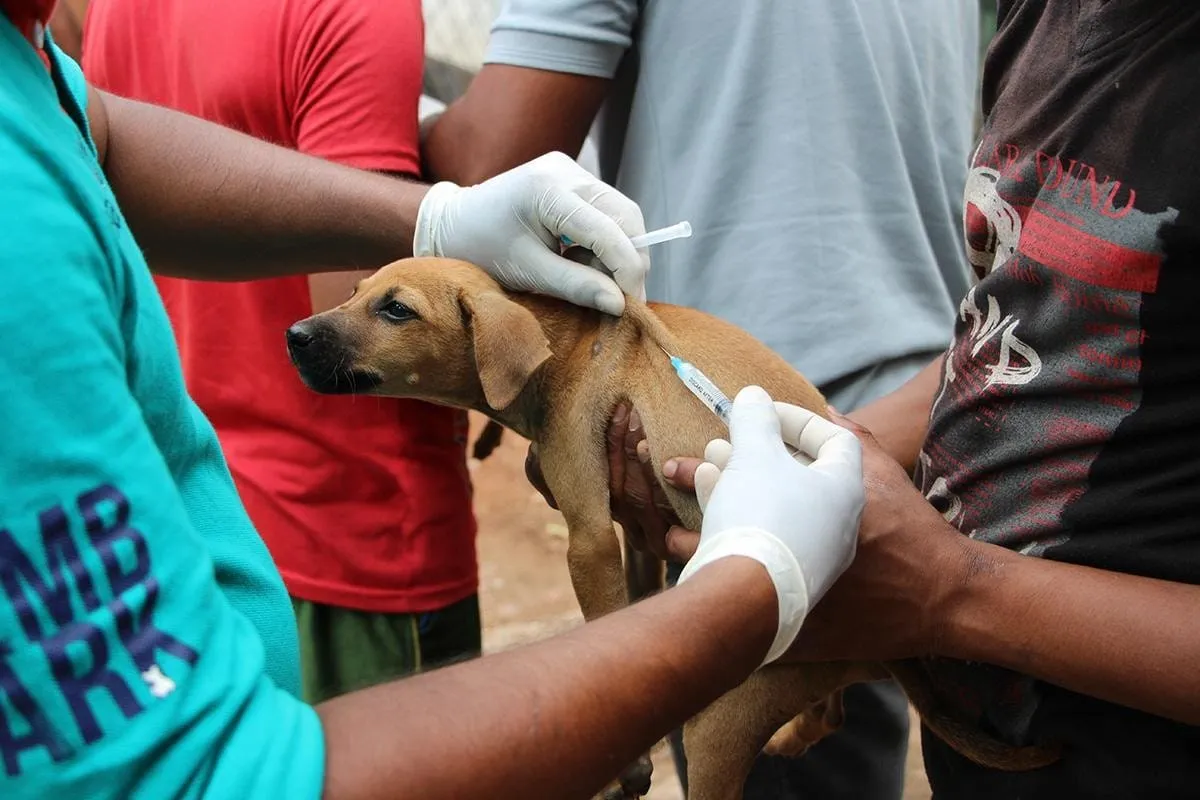
Dog Vaccination
And remember:
Love for animals must be paired with respect and caution.
What Services Are Available in Sri Lanka?
Sri Lanka has a well-established anti-rabies programme under the Ministry of Health:
- Anti-Rabies Units (ARUs) in major hospitals
- Free or subsidized post-exposure vaccination
- Availability of Rabies Immunoglobulin
- Public health education campaigns
- Mass dog vaccination and sterilization programmes
These services are life-saving and widely accessible.
Key Takeaways
- Rabies is deadly but preventable
- Any bite or scratch = medical emergency
- Immediate washing + early vaccination saves lives
- Sri Lanka still has rabies-never ignore a bite
- Responsible pet ownership is crucial
Closing Reflection
Jayanath walked away with four injections, and a story to tell.
He never saw the kitten again. But more importantly, he lived to tell the tale.
Sometimes, the smallest encounters carry the biggest lessons.
In Sri Lanka, even a playful kitten can be a reminder:
Respect animals. Act early. Save lives.